“El hilo que sostiene la vida”
Hay un instante —eso pienso ahora, mientras la luz de la tarde se recuesta sobre los muebles y las sombras se alargan con la elegancia de un gesto olvidado— en que cada ser humano comienza a comprender que su vida es, definitivamente, suya. No de las voces que lo rodean, ni de las expectativas que otros depositan silenciosamente sobre sus hombros, ni de los pensamientos heredados que a veces se deslizan como hojas secas en un pasillo largo. Hay un momento, un susurro casi imperceptible, en que uno entiende que la existencia es como un hilo que se sostiene entre los propios dedos, y es la mente —con su vastedad y su fragilidad— la que decide hacia dónde dirigirlo.
A lo largo del día, mientras la conciencia se expande y se contrae como la respiración del mar, uno descubre que son los pensamientos quienes dibujan las primeras líneas del camino. Y qué misteriosa criatura es el pensamiento: tan invisible y sin embargo tan poderoso; tan íntimo, y aun así capaz de empujar a una persona hacia el horizonte o de encerrarla en un cuarto sin ventanas. Los pensamientos, si uno aprende a escucharlos, se convierten en aliados; pero si uno los teme, pueden volverse laberintos donde es fácil olvidar la salida.
Por eso dirigir la vida exige, antes que nada, observar lo que ocurre dentro de la propia mente con una atención casi amorosa, como quien cuida de un jardín que siempre está creciendo, incluso en la oscuridad. No se trata de controlar cada idea, como quien pretende detener el viento con las manos, sino de aprender a reconocer cuáles pensamientos sostienen y cuáles desgarran; cuáles invitan a avanzar y cuáles atan los pies al pasado.
Pero claro, la mente no es la única capitana en este barco que es la vida. También están los sentimientos, esos movimientos profundos que nacen en las cuevas más antiguas del alma. A veces se manifiestan como una corriente cálida que impulsa hacia algo o hacia alguien; otras, como un torbellino que sacude todo sin pedir permiso. Y aprender a dirigirse a uno mismo utilizando los sentimientos no significa ignorarlos ni someterse a ellos, sino más bien aproximarse con la suavidad de quien se acerca a un animal salvaje, reconociendo su fuerza y su belleza, sin olvidar que también pueden herir.
Dirigir la vida implica un acto de equilibrio: escuchar al corazón sin perderse en él; usar la razón sin sofocar el impulso que da sentido a cada gesto. Es descubrir —con sorpresa, a veces con dolor— que la libertad no se encuentra en evadir los sentimientos, sino en comprenderlos. Porque cuando uno aprende a descifrar lo que ocurre en esa geografía emocional, algo dentro se ilumina: una claridad que no viene del exterior, sino de ese punto interno donde la intuición se encuentra con la experiencia.
Y luego está el conocimiento, que no es solo aquello que se aprende en libros o en conversaciones profundas, sino también el conocimiento que se adquiere a través de la vida misma: los tropiezos, los descubrimientos, las pequeñas epifanías que llegan en la madrugada, las derrotas que enseñan más que cualquier maestro. Ese conocimiento —el que nace de la propia historia— se convierte en la brújula que ayuda a orientar la libertad.
Porque la libertad, en su forma más pura, no es la ausencia de obstáculos, sino la presencia de conciencia. Es darse cuenta de que cada paso puede ser elegido. Que incluso en las situaciones más estrechas existe un margen —pequeño, sí, pero real— desde el cual decidir. Libertad es mirar el propio reflejo, con todas sus contradicciones, y aun así optar por caminar hacia adelante.
Cuántas veces vivimos creyendo que somos prisioneros de las circunstancias, cuando la verdadera prisión se construye dentro, piedra a piedra, con pensamientos ajenos y silencios impuestos. Y qué revelador es —casi como un amanecer interior— darse cuenta de que esos muros pueden caer no con fuerza, sino con comprensión. Porque cuando uno entiende quién es, qué siente, qué piensa y qué desea realmente, entonces ninguna fuerza externa puede apoderarse de la vida.
Ser independiente no significa no necesitar a nadie, ni vivir en una torre elevada donde ningún afecto nos alcance. Ser independiente significa, más bien, saber que cada decisión nace de un lugar auténtico, un territorio propio que nadie puede reclamar. Es construir una vida que responda a la voz interna, no al coro confuso de lo que otros esperan. Es caminar sabiendo que los pasos, aunque acompañados, son completamente nuestros.
Imagino —mientras la tarde termina de caer— que la vida de cada persona es como un río. Algunos lo recorren sin mirar demasiado sus orillas; otros se lanzan contra la corriente intentando dominar el flujo; pero hay quienes, lentamente, aprenden a leer el agua. Observan cómo se mueve, cómo cambia de profundidad, cuándo se vuelve mansamente transparente y cuándo se oscurece como si guardara secretos. Y al observar, descubren que el río puede dirigirse, no dominado, sino acompañado: con una mano en el timón y el alma atenta a cada giro.
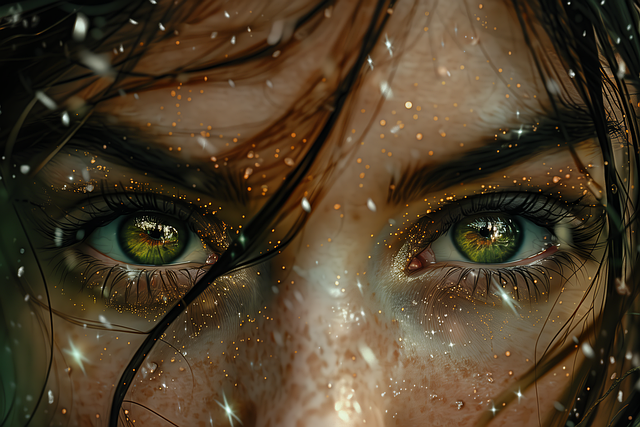
Ilustración de MythelogyArt
Así es vivir con independencia: no se trata de imponerse sobre la vida, sino de navegarla con conciencia. De saber que uno es, en cada instante, el responsable de su dirección. Que la esencia no se define por lo que nos sucede, sino por lo que elegimos hacer con lo que sucede.
Y allí, en ese gesto de elegir —tan humano, tan frágil, tan poderoso— nace la libertad verdadera. Una libertad que no grita, que no necesita declaración, porque se siente en el silencio de quien sabe que dirige su vida desde un lugar profundo y auténtico.
Quizá, entonces, dirigir la vida no sea una meta, sino un acto continuo: una danza invisible entre pensamiento, emoción, conocimiento y alma. Un diálogo que nunca se termina. Una búsqueda delicada, luminosa, a veces ardua, pero siempre reveladora.
Y en esa búsqueda —tan íntima, tan nuestra— descubrimos, finalmente, que la independencia no es una llegada, sino la manera más honesta de estar vivos.
There is a moment —so I think now, while the afternoon light reclines upon the furniture and the shadows lengthen with the elegance of a forgotten gesture— in which every human being begins to understand that their life is, unmistakably, their own. Not belonging to the voices that surround them, nor to the expectations others place silently upon their shoulders, nor to the inherited thoughts that sometimes drift like dry leaves down a long corridor. There is a moment, an almost imperceptible whisper, in which one realises that existence is like a thread held between one’s own fingers, and that it is the mind —vast and fragile— which decides where to guide it.
Throughout the day, as consciousness expands and contracts like the breath of the sea, one discovers that it is thoughts that draw the first lines of the path. And what a mysterious creature thought is: so invisible and yet so powerful; so intimate, and yet capable of pushing a person towards the horizon or locking them in a room without windows. Thoughts, if one learns to listen to them, become allies; but if one fears them, they may turn into labyrinths in which it is all too easy to forget the way out.
This is why directing one’s life requires, above all, observing what takes place within one’s own mind with an attention that borders on tenderness, as one might tend a garden that is always growing, even in the dark. It is not a matter of controlling every idea, as though trying to stop the wind with one’s hands, but of learning to recognise which thoughts uphold and which tear apart; which ones invite movement and which bind one’s feet to the past.
And yet, of course, the mind is not the only captain aboard this vessel we call life. There are feelings, too —those deep movements that rise from the oldest caves of the soul. Sometimes they manifest as a warm current urging us towards something or someone; at other times, as a whirlwind shaking everything without asking leave. Learning to guide oneself through one’s feelings does not mean ignoring them, nor submitting to them, but rather approaching them with the gentleness of one who draws near to a wild creature, acknowledging its strength and its beauty, without forgetting that it can wound as well.
To direct one’s life is to engage in an act of balance: to listen to the heart without becoming lost in it; to use reason without suffocating the impulse that grants meaning to every gesture. It is to discover —with surprise, sometimes with pain— that freedom is not found in evading emotion, but in understanding it. For when one learns to decipher what is unfolding in that emotional geography, something within becomes illuminated: a clarity that comes not from without, but from that inward point where intuition meets experience.
And then there is knowledge, which is not solely that which is learnt in books or in profound conversations, but also that which is acquired through life itself: the stumblings, the revelations, the small epiphanies that arrive in the early hours, the defeats that teach more than any master. Such knowledge —born of one’s own history— becomes the compass that helps to orient freedom.
For freedom, in its purest form, is not the absence of obstacles, but the presence of awareness. It is the realisation that every step may be chosen. That even in the narrowest of circumstances there exists a margin —small, yes, yet real— from which to decide. Freedom is to look at one’s own reflection, with all its contradictions, and still choose to walk forward.
How often we live believing ourselves prisoners of circumstance, when the true prison is constructed within, stone by stone, with borrowed thoughts and imposed silences. And how revealing it is —almost like an inner dawn— to realise that such walls may fall not through force but through understanding. For when one understands who one is, what one feels, what one thinks and what one truly desires, no external force can take possession of one’s life.
To be independent does not mean to need no one, nor to dwell in a tower so high that affection cannot reach us. Independence means, rather, knowing that every decision is born from an authentic place, a territory within that no one else may claim. It is to build a life that responds to the inner voice, not the confused chorus of what others expect. It is to walk knowing that the steps, though accompanied, are entirely one’s own.
I imagine —as the afternoon finally settles into evening— that each person’s life is like a river. Some move along it without looking much at its banks; others hurl themselves against the current in an attempt to master its flow; but there are those who, slowly, learn to read the water. They observe how it moves, how its depth shifts, when it becomes gently transparent and when it darkens as though guarding secrets. And through observing, they discover that the river may indeed be guided —not dominated, but accompanied— with one hand on the helm and the soul alert to every turn.
Thus is life lived in independence: not by imposing oneself upon it, but by navigating it with awareness. By knowing that one is, at every instant, responsible for one’s direction. That one’s essence is not defined by what happens, but by what one chooses to do with what happens.
And in that act of choosing —so human, so fragile, so powerful— true freedom is born. A freedom that does not shout, that needs no proclamation, for it is felt in the quietude of one who knows they steer their life from a deep and authentic place.
Perhaps, then, directing one’s life is not a destination but a continuous act: an invisible dance between thought, emotion, knowledge, and soul. A dialogue that never concludes. A search both delicate and luminous, at times arduous, yet always revealing.
And in that search —so intimate, so entirely our own— we discover, at last, that independence is not an arrival, but the most honest way of being alive.